
Sidebar Header

Sidebar Header

Sidebar Header

Sidebar Header

    Addictive TV Interview

    jp | Audiovisual, Cinema, Interviews, Video, Vj-ing | Thursday, 31 July 2008

    (( Update : this interview was done in 2003, and is part of large import of writing from the now defunct octapod.org/jeanpoole, which covered live video and electronic art from 2001-2005. Mostly I’ve been publishing the posts with their original date, but this slipped through and has been linked to already. See the archives for more. ))

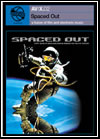
    Satellites these days get so micro, you can practically zoom in on someone moving house and tell whether they’ve packed their underwear or not. Graham lost a nice pair of commodore 64 boxers once. You get this though, when relentlessly travelling around Europe to promote your UK-based audiovisual label, vj & TV production crew, Addictive TV. Coincidentally, they’ve released a DVD, ‘Spaced Out’ which has the likes of Cold Cut and EBN remixing 40 years of NASA space footage. They’d love some Aussie content for their acclaimed Mixmasters audiovisual DVD series, and some of this will be screened in a few months on SBS. Will review ‘Spaced Out’ next week, and leave www.addictive.com 2u.

    What was a turning point for your understanding of how audio and vision relate?
    addictiveLots really. As a kid, I watched a lot of musicals. Check out, say, old Fred Astaire movies and often the music and film action is completely synched. Even Fiddler on the Roof or the total trippyness of Bedknobs & Broomsticks have very musical audiovisual scenes – where the sound from the action you see is incorporated in the music. But with our own work, I remember watching people’s faces when we had a screening of Transambient back in ‘98, they were completely fixated – that was a turning moment.

    What’s the difference between your TV and club work?
    With TV & DVD work, things have to work far more on a one-to-one basis between viewer and the TV. Repetition and loops can last much longer in a club than on TV, simply because people are maybe more focused on the music and experiencing the images in a less direct way. Similarly, some images work well on TV but look naff in a club. Also, a live performance is a one-off; so tends to be more spontaneous, which can also mean it’s less polished than recorded work, which has to stand up to being watched over and over.

    What TV projects are you working on now?
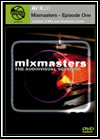
    addictive Series 3 of Mixmasters for ITV1 over here – just started talking to labels, VJs, animators etc. As the series’ have gone on, they’re really reflecting the expanding global visuals scene, it’s great to see the really different work that comes out of say, Tokyo or Berlin. Mixmasters has always been a mixture of original audiovisual work and DJ/VJ mixes, but more AV artists are cropping up now so we’ll be seeing more of that. Should say by the way, that series 1 is on SBS this Spring.

    How can aspiring OZ-VJs or audiovisualists submit for the Mixmasters series?
    Send us examples – not just live mix tapes, but recorded work, promos, AV mixes, stuff they’ve put into festivals etc. Mixmasters is much more about VJs being visual recording artists than a “live DJ/VJ mix” project. Our postal address is on www.addictive.com and we’ll be all finished around July.

    What bores you to tears about live video or videoclips?
    Cameras on the DJ. The same short clips fired off a laptop all night. Old clips of breakdancers. Flying down tunnels. Endless spinning 3D objects.

    What have you noticed about the evolution of the Mixmasters series?
    How we’ve still got a long way to go in terms of AV and visuals being accepted globally, and how closed-minded so many broadcasters are around the world. It’s clear though that more and more people are getting into visuals – it’s really growing quite quickly. In some ways the whole thing might be growing too quickly. There aren’t enough media outlets for this and right now the entertainment industries (clubs, music, television and the wider media etc) aren’t supporting the whole ‘AV thang’ in all its guises enough to sustain a rapidly growing VJ / AV scene. Hopefully that’ll change in the coming years.

    Audiovisual software & hardware stepping forward at the moment?
    It’s good to see companies like Pioneer and Roland developing or making off-the-shelf gear now aimed at VJs. With software, there seems to be new stuff appearing every week! Also, I know someone creating work for some VJ gaming software for one of the games consuls, so someone thinks “there’s money in them there hills!”.

    What’s Addictive.TV doing in 2010?
    Running it’s own 24 hour channel – presuming the world’s not been reduced to a Mad Max style smallpox ridden wasteland by then, in which case we’ll be running an audiovisual club for mutants that still have eyes and ears.

    See also : another addictive interview for ministry mag and
    addictive tv DVD reviews

    Share/Save/Bookmark

    242.Pilots Interview

    jp | Audiovisual, DIY, DVD, Interviews, Music, Software, Video, Vj-ing, electronic art, imagery | Thursday, 31 July 2008

    42 pilots
    For mating purposes the South Australian Lyre bird has developed wonderful song and signal capacities. It can even mimick urban sounds such as a camera lens zoom and click or a car alarm. The fine feathered 242.Pilots on the other hand, are a video performance trio whose signal processing and improvisation often has them compared to a freejazz ensemble. Not sure how their recently released DVD fits into their mating strategies, but it’s a great showcase for their capacity to improvise.

    (( Update : this interview was done in 2003, and is part of large import of writing from the now defunct octapod.org/jeanpoole, which covered live video and electronic art from 2001-2005. Mostly I’ve been publishing the posts with their original date, but this slipped through and has been linked to already. See the archives for more. ))

    DVD: – Live @ Bruxelles
    Distributed through Carpark Records, this DVD allows the chance to see and hear a live recording of the 242.Pilots performance at a Belgian festival in 2002, three solo pieces and an interview which illuminates their processes and interactions. Under the pilots bonnet, lies custom made software – video components for the max/msp programming environment. Having built their own software with this, the pilots can freely improvise in real-time, layering and transforming imagery in real-time. Effects are also layered in real-time, and the customised effects are often foregrounded more than the actual content itself. The end result is at times haunting, beautiful and fantastically elastic. For the most part they maintain a level of visual interest, if not surprise, and interplay with sound. The occasional lapses you would expect within a long improvisation, I found were related to the saturation and predictability of certain effects. Even their own customised software has it’s certain aesthetic trademarks and glitches. Fascinating DVD though, available through http://242pilots.org. While you’re there, click along to www.nervousvision.com, the site of Berliner HC Gilje, who answered these questions:

    What are the challenges of building a video ‘instrument’ ?
    Our instruments are a combination of software and hardware, and must be built in a way to encourage/stimulate our visual dialogue. The challenge is to make a interface, maybe a mix of hardware controllers and video software, which is very flexible, responsive and which gives room for unexpected things to happen. The biggest problem is balancing features with an intuitive interface: if you end up having to think too much while you perform you have a problem.

    What is liberating / limiting about customising your own software?
    Achieving results not possible with available commercial software, and also to make mistakes which creates interesting results. The limitation with using an environment like max is that you spend hours and hours on your interface, and continually keep implementing and changing the program which makes it less intuitive. In max based work you tend to get bored with your patch when you know it too well. With programs like imagine, you can learn to master the features to a certain degree.

    How much do u consider the audience & their perception of ‘liveness’ when composing a video work?
    242.pilots wants the focus of the audience to be on the audiovisual output of the performance, not us as performers. For us the interesting thing is to create experimental video in a live setting, which gives a complete different energy and dynamic than to make a prepared video and screen it in front of an audience. The presence of the audience and the other players, as well as the space, our mood++ totally effects what we create, as it is always completely improvised.

    Have you noticed with your live work with dancers, that the audience is more receptive to the live-video?
    In my recent work with dancers I use no recorded source material, only the dancers as input for my video. It is then obviously easier for the audience to understand the “liveness” of the video than in an impro-setting like 242.pilots.

    Live video-art is often criticised for not feeling worthwhile, unless you know how it is was made. How do you feel about this?
    At our performance in Bruxelles upon which the dvd is based, a large part of the audience didnt understand that it was created live, but looked at it as an experimental film. From my experience with improvisation there will always be uninteresting parts but usually there are those magic moments which makes the whole jamsession worthwhile, just as in a music jam. If the total experience of a performance is negative, then it’s a bad show, and not related to the genre itself.

    What are the difficulties with live video compared to audio?
    It demands more attention, as people aren’t so used to watching longer stretches of non-narrative video. Compared to laptop audio performance, at least you don’t have to watch the boring guys behind their laptops as you are supposed to look at the video.

    Abstract cinema? Graphic design in motion? What are you aiming for with your improvisations?
    People always look for some sort of story no matter how abstract and non-narrative the video is, and I find it interesting this dialogue between us and the audience in terms of creating meaning. Our improvisations are like taking a walk in some unknown landscape, and depending on the curiosity/attentiveness of each indivual in the audience, they will all walk out of the space with their own unique experience.

    Future projects? ( any longer narrative live-cinematic aspirations? )
    A collaboration with contemporary music composer Yannis Kyriakides, a 20 minute piece which will tour with an ensemble and be performed live, and my Tokyoproject, which will be a 4 channel video installation, a live video-audio piece and DVD with Jazzkammer. The live Tokyopiece would be something like a longer narrative cinema. Am also continuing collaborations with the sound artist Kelly, in our impro duo BLIND.

    Share/Save/Bookmark

    Winter Video Snippets

    jp | Audiovisual, Music, Software, Video, Vj-ing, electronic art, imagery | Thursday, 31 July 2008

    Snapshot of recent audiovisual developments.

    First Up
    3 of the most exciting things of late? Previews of the upcoming Resolume 3 Avenue, an inter-application video routing piece of ( mac only ) software released by Vade. and the new 3L real-time 3D program.

    Resolume 3 Avenue will be available for both Mac and PC in September and already looks something like the holy grail of live audiovisual applications. Some of it’s key features : – VST audio plug-ins can be used ( in a live video application! ) and easily sync-ed with visual effects to create custom audiovisual effects. – Lots of beat and loop controls. – Drag and drop audio files onto video clips and have them play in sync. – Heavy integration of graphics card and 3D capabilities – and much more in the demo video at their site.

    Vade’s great new app is a patch built in Quartz Composer which allows the user to isolate whichever part of the screen they want, then re-route this as a live source in another application such as VDMX. Which means photoshop painting or game playing, or other weird video glitch apps etc can be running in one spot and that output can then become one video channel in a video mixing program. Live grafitti, or rotoscoping on top of videos, mixing games with other clips and more – all on one machine with no need for a mixer. Works super fast too.

    3L by http://artificialeyes.tv/, recently ended a long beta development phase, and has arrived as a very sophisticated 3D real-time application with several
    unique features : – individual rgb fx wet/dry mix controls – built in DMX control for the VMS moving mirror projectors. – Interpolated presets ( slide between complex presets easily )

    Available now, jump in while it’s hot.

    Web-Video?
    No great leaps recently in technical terms, but have been enjoying some of the new flickr.com video groups ( eg the Kite Aerial Video group, various underwater and abstract video groups) created since they opened their doors to videos – or as they put it, ‘long photos’ up tp 90 seconds long Playback on the site is nice, but a shame clips can’t be downloaded in an editable format. Blip.tv and vimeo.com seem to be staying ahead of the video pack at the moment. Locally, Australia’s ABC have launched a hosting site that encourages the remixing of its audio and video content : pool.org.au.

    For those who prefer to have a vimeo account for quality and youtube account as well for the hits, noticed that tubemogul.com enables easy simultaneous upload to many sites at once.

    Visual Blogs
    Some various additions to the RSS reader of late :
    Code And Form : Computational Aesthetics – http://workshop.evolutionzone.com/
    http://mograph.net – well populated motion graphics forum where people throw around problems and solutions.
    http://aefreemart.com – various after effects tips and tutorials noted here.
    http://advancedbeauty.org/blog – Ongoing audiovisual projects.
    www.eurodisney.biz – Latvian axe in the world of aesthetics.
    vvork.com – Themed curation and daily flood of artprojects, presented simply.
    http://lightsurgeons.com – Documenting projects for the UK AV crew.

    Video of the Week
    This has been doing the rounds a lot ( 5 million + views at last watch ), but there’s a good reason for that. Carnegie Mellon Professor Randy Pausch passed away recently (Oct. 23, 1960 – July 25, 2008), and recorded a one hour lecture last year, some time after being told he only had a short time to live. With that in mind, his last lecture: Achieving Your Childhood Dreams, takes on all the more meaning and resonance, and well worth the viewing.

    May 08 Video Snippets
    April Video Snippets 08
    Eyeball Snippets for July 07

    Share/Save/Bookmark

    Expanded Cinema @ MIFF 08, Jon Pak Interview

    Movie star guests and a huge roster of great films is fine, but it’s exciting to see Melbourne’s International Film Festival embracing some live cinema experiments this year.

    jon pak

    “If I’ve learned anything from big budget action movies it’s that complicated global problems are best solved by one lonely guy.” – So sayeth the cheeseburger chumping Morgan Spurlock (Super Size Me). Morgan will be chatting with John Safran about his latest film, ‘Where in the World is Osama Bin Laden?‘, Sat 2 Aug 4:00 PM, Cooper’s Festival Lounge, 154 Flinders St. Those two’d be stars, yes. Stallone and Schwarzenegger can finally pass the baton to the new generation of action hero pranksters out to save the world.

    Not to forget Eric Bana – who will be presenting a screening of George Miller’s Mad Max II ( Tue 5 Aug 7:00PM @ Forum Theatre ), and talking after it about Peak Oil, Climate Change and the need to curb our addiction to fossil fuels ( or maybe the Hulk or Chopper etc ).

    Five Lines, Five Films? 
    I’ll be @ these, holler if you’re heading along…
    DaiNipponjin Sat 26 Jul 11:15 PM Greater Union 5 : Japanese comedian Hitoshi Matsumoto tries his hand as director and mega-sized superhero.
    PERSEPOLIS Sat 9 Aug 7:00 PM Greater Union 6 : Feature length animation telling the story of a girl growing up in Iran. 
    WALTZ WITH BASHIR  Sun 10 Aug 1:00 PM Greater Union 4 : How many compelling Middle Eastern feature length animations can one festival have?
    THREE MONKEYS  Sat 2 Aug 5:00 PM Capitol : Turkish thriller that untwists interior worlds and recent Cannes festival winner.
    PLEASURE OF BEING ROBBED, THE  Sun 27 Jul 9:15 PM Greater Union 4 : Quirky daydreamer of a film featuring road trips, lots of theft and a polar bear.

    ( + have seen, but highly recommend MAN ON WIRE!)
    ( Films listed in A-Z on one page )

    Intermission: Who is Miss Roder?
    Located in an old Flinders lane warehouse ( Fri 1, Sat 2 Aug ), this series will feature a series of performance film events from international guests and some of Australia’s leading exponents of ‘expanded cinema’ and video art. With quite an engaging mix of digital and analogue experimenters on hand, this should be quite a treat. Amongst the highlights – experimental animator Dirk de BruynAbject Leader’s photochemically milked sonics, Guy Sherwin with Lynn Loo, Ben Russell, long time Melbourne visualist Steven Ball returning to the city, and a chunky, descriptive program

    Jon Pak (pictured above), experimental composer, designer of the http://lightmatrixinterface.com hardware, one of Melbourne’s dorkbot organisers, and recent deliverer of a very popular Next Wave festival soft/hardware performance workshop ( aye he’s busy ), had this to say about the Miss Roder event he’s involved with:

    What’s ‘the Feast’ ?
    A performance piece that examines ritual and the subtleties of human interaction through sound within the context of a fine dining setting? Or a couple of ill-mannered restaurant patrons making a ruckus in the name of art.

    What was your role within that?
    Concept, sound design, video, broken glasses, soiled tablecloths and much soldering.

    What’d you find challenging / surprising about the development process?
    Working with the thespian types. It’s something I don’t have much experience with and also from the actors’ perspective, they were not used to working with sound. So the process has been a challenge, but to their credit they are doing a marvellous job.

    Intriguing software in 2008?
    Quartz Composer. Not exactly new in ‘08 but recent additions in late 2007 have opened up some exciting possibilities in the areas of video processing and interactivity.

    Hardware?
    The iPhone. Again, not so 2008 but the potent mix of accelerated graphics, multi-touch capabilities and network facilities make for an intriguing development platform with many exciting possibilities. I want one.

    What are the joys and limitations of your Light Matrix interface?
    Its got lots of blinking lights and it looks cool on stage. The downside is that it is difficult to play and a nightmare to set up. It’s something I still haven’t worked out: do we become a more proficient player or make the instrument easier to play?

    What plans do you have for developing it further? 
    Making it a permanent installation but I don’t want to give too much away yet. Future versions may include new form factors, force feedback and better software integration.

    MIFF 08 film you’re looking forward to?
    To be honest I haven’t had the chance to look at the program yet. I’m always a sucker for animation.

    MIFF 2006 Review
    MIFF 2005 Review
    MIFF 2004 Review
    MIFF 2003 Review

    Share/Save/Bookmark

    Underwater Indian Ocean Drummer

    jp | Audiovisual, Cinema, Music, Musings, Video, Vj-ing, animation, imagery | Monday, 21 July 2008

    Video odds and ends eh? Below, footage from a few hundred kilometres north of Perth in Dec 2007, with Shultz Marshall aka ‘Captain Rad’, ( ex-drummer for Aleks + the Ramps ) and my new underwater camera casing. Little intro sequence of waves crashing @ the Bogey Hole in Newcastle, NSW. Music by Suckafish P Jonez from Brisbane, and we used this clip as part of a 12 minute AV performance @ NIDA in Sydney early 2008.

    (click the pic below to see the video @ my blip.tv page, the 640×480 is too wide for ze blog )
    bogey hole

    Share/Save/Bookmark

    Remembering Emile Zile + DJ Krush

    As we continue to outsource our memory processes to small pocket electronic devices, it’s nice to occasionally reflect about artists who play with the ways we remember, and how sound can shape this.

    Emile Zile
    emile zileBack in the twentieth century, pre-omnipresent digital cameras archiving all moments of urban life, Emile Zile was busy hustling the inner-city lanes of Melbourne, snapping photos of its vibrant graffiti scene, steadily documenting it for all to see at the now defunct cleansurface.org ( digital archiving is another whole can of worms for another time ). Everpresent in the collection were moments of humour, Emile having a keen eye for unlikely juxtapositions and everyday absurdity.

    Emile’s now studying video in Amsterdam ( fresh Dutch blog action ), but the beginnings of his current video art explorations can be traced back to an appearance of his on National Australian television, where he was selected as a contestant on a game show, and proceeded to upstage the host with a series of gestures, later narrating his thoughts of the experience onto a video ( now archived alongside others ).

    The video explorations continued, culminating sometime later in a phase of laptop black metal, with a much better Kiss theatrics kinda presence than that implies, with abundant fake blood, make-up, custom video and refried metal. Emile’s eclectic VJ tastes and style made it seem a natural progression when he became the band VJ for Melbourne’s infamous alt-hip hop crew, Curse Ov Dialect ( “our own sound somewhere betwwen mr bungle, public enemy and everywhere in beween sampling everything from inuit throat games to psychedelic folk—-but still straight up hip hop!” ). For last year’s European tour without their unavailable turntablist, Emile simultaneously handled sound duties – via VJ software, deftly mixing pixels while sending out the backing tracks – including pre-recorded turntablist video!

    All of which is pre-amble for a recent peformance of Emile’s called ‘Post-It Kino’. Briefly back in Melbourne for the 2008 Next Wave Festival, Emile was one of 7 artists participating in ‘House Proud’ – a novel arrangement where the artists were invited to use strangers’ homes as both a gallery and the source of their inspiration, making site-specific work, that an audience would later visit and explore for one night only.

    Arriving at the house in question, Emile’s audience were ushered into a lounge room that had been converted into a private cinema with surround sound ( six screenings / performances over a 3 hour period ). We faced a projector screen, Emile sitting beside it and pointing a video camera at a TV screen facing himself, a generic bouncing DVD icon moving around the screen. And then it began – a cluster of instantly recognisable movie soundtracks were loaded one by one, filling the space, and Emile scribbled words on yellow post it notes, and started sticking them onto the TV screen in various sequences. “Close up of eyes.” “Close up of holster.” “Tumbleweed blows.” Combined with the western movie soundtrack, it was surprisingly compelling cinema. The sounds of a helicopter rushed around the room. Two words : “Martin Sheen”. Then “ACID”, “a broken mirror”, etc etc. Apocalypse Now had never been so funny.

    ez

    And Subsequent Krushing
    Fresh after Emile’s House-Proud gig, went along to catch the touring Japanese turntable maestro, DJ Krush. Virtuoso vinyl performances inevitably involve playing with memories, in Krush’s case there’s now quite the back catalogue of treasures to trigger. Tonight though, moreso than usual, he seemed able to tease out those memories, and toy with our expectations, taking twists and turns, resplicing and reconstructing at will. A decade old classic hit is almost implied, rather than introduced, and as the crowd cheers with the recognition, the track seems to implode in on itself, somehow shuffled into an entirely new formation.

    Bear with with me, but if track A was like an inflatable giraffe filled with water, walking around with orange fish swimming inside it, then this newly formed, this new track being created by the man with the decks and effects, would now be better described as an inflatable cheetah, filled with water, stealthily jogging with small inflatable giraffes swimming around inside it. Something entirely new yet based on the utterly familiar. And on it went …

    Part of the arsenal to help these reconstructions are evident in the photos below, the shot by Melbourne’s Lynt showing Krush’s laptop based digital mixer interface, enabling him to load many versions or layers of a track, and the Vestax shot showcasing his PMC-20SL 10 year old mixer which features an in-built sampler and delay effect, and a bunch of sliders he was caning at the Prince of Wales gig…

    dj krush

    Share/Save/Bookmark

    Standard Operating Procedure

    jp | Cinema, Networks, distribution | Thursday, 10 July 2008

    errol morris

    Deconstructing the photographs of Abu Ghraib with Errol Morris.

    Melbourne’s Cinema Nova recently screened the latest Errol Morris documentary, and a few minutes after it finished, cut to the director on the screen, who chatted and answered audience questions enthusiastically for some 45 minutes via satellite ( or skype / ichat ). Felt quite the privilege to have such direct access to Errol, straight after his compelling and confronting exploration of events at Abu Ghraib, hearing his clarifications and reasonings behind his film making decisions. And felt surprisingly natural to have the director on screen at the audience’s disposal, a pretty effective way of distinguishing a cinema house from a home theatre, likely something we’re going to see more.

    “Cinematic interventions? Oh, that makes me sound like some kind of psychiatric social worker.. ( much audience laughter ), ” was his response to an early question about his use of heavily stylised renactments within the film.
    “I liked to think of them as ‘visual moments’ .. and the most important is that the filmmaker seeks truth, then the techniques available can be used in service of this.”

    The truth Errol seeks in Standard Operating Procedure is the wider context and realities surrounding the events in the Abu Ghraib prison in Iraq. The prison received global attention in 2004 when photographs were released detailing many instances of humiliating and degrading behaviours and events seemingly being orchestrated by U.S. prison guards. Central to Errol’s film is examining these photographs with a range of interviewees ( including several of the guards ) and forensic experts and trying to piece together what actually happened, and to what extent the individuals charged and imprisoned were acting according to their own impulses or to instructions from above as part of a larger system.

    A few key points jumped out from the screening : – although a military prison, the majority of those imprisoned were local males of ‘fighting age’ who had been gathered from the streets for various minor or alleged offences. – The photographs shown were from the ‘softening process’, something that was used before the prisoners were sent to be tortured. This was a preparation phase, and the public hasn’t seen photos from the ‘torture phase’. – the guards repeatedly described how they had arrived into and were consistently given instructions from above. – No-one higher in rank than the low ranking officers witnessed in the photographs has been charged or imprisoned, despite one of the photographs containing the dead body of a man who had died during torture, effectively having been murdered in prison.

    The film is disturbing on many levels, and achieves it’s power in part from the way Morris interviews his subjects – he uses what he calls the interrotron ( see diagram : http://tiny.cc/iSgsv ), a camera technique he invented using a teleprompter to show the interviewers face in front of the camera lens, which allows the interviewee to make eye contact with the audience. And so much of the film involves U.S. military prison guards detailing explicit and depraved scenarios but while seeming to stare across with coffee table intimacy. In the Q+A afterwards, Morris was asked about this and pointed out that the person asking that very question had to choose between looking into a camera and looking at Errol on the screen, but couldn’t do both, hence Errol was seeing video of someone who was looking off to one side

    Errol’s Got A Pedigree
    The Fog of War – about the life and times of former United States Secretary of Defense Robert S. McNamara, won best documentary academy award in 2004, but several of his earlier documentaries weren’t nominated as his various experimental techniques ( in the service of telling the story ) caused concern with the oscar givers.

    The Thin Blue Line – investigated the murder of a police officer and famously helped someone facing the death penalty in texas get released, and introduced stylised renactments as a controversial technique for documentary making back in 1988.

    A Brief History of Time – documented the life of physicist Stephen Hawking.

    Fast, Cheap and Out of Control – a lion trainer, a topiary sculptor, a mole rat specialist, and a robot scientist, got the specialised Morris doco-treatment.

    Mr. Death: The Rise and Fall of Fred A. Leuchter, Jr – interviews with an execution technician (!) who is also a holocaust denier because he cannot conceive that the Auschwitz gas chambers were technically possible ( not that Fred has researched this much at all ).

    Gates of Heaven – Errol’s first documentary about a pet cemetery business – and which spawned a short film in response : “Werner Herzog Eats His Shoe” in which the German director held up his part of a bet and cooked his shoe on stage with herbs and garlic then ate it upon Errol’s finishing the film.

    Share/Save/Bookmark

    Kurt Vonnegut’s Oily Crystal Ball

    jp | Musings, Sustainability, books, imagery | Thursday, 03 July 2008

    vonnegut

    He’s dead now, but the legendary comic novelist Kurt Vonnegut has been predicting today’s ever-escalating oil prices for a long, long time.

    “I once had a high that not even crack cocaine could match. That was when I got my first driver’s license! Look out, world, here comes Kurt Vonnegut.” – K.V, 1994.

    Kurt Who?
    From Player Piano in 1952, a dystopian novel where human workers have been largely replaced by machines, through to a collection of post-humously published works in 2008 ( Armageddon in Retrospect ), the somehow simultaneously cynical and warm-hearted worldview of Kurt Vonnegut has been spilling onto the page of novels, film scripts, tv scripts, articles and essays. He’s funny too. And has an asteroid named after him ( 25399 Vonnegut – thanks wikipedia ). There’s probably a 2nd year arts student buying one of his books in a second-hand store right now. So he had it going on, wild leaps that were science fiction in scope, an ability to point out the absurdity of human endeavours, and as it turned out, he had a thing against oil.

    Oil currently accounts for about 43% of the world’s total fuel consumption, and 95% of global energy used for transportation. Oil and gas are feedstocks for plastics, paints, pharmaceuticals, fertilizers, electronic components, tyres and much more. For every one joule of food consumed in the United States, around 10 joules of fossil fuel energy have been used to produce it. ( energybulletin.net )

    Back in the Day
    Part of what made Kurt Vonnegut unique his experiences in World War II. As later documented in the semiautobiographical ‘Slaughterhouse Five’ ( novel and then a film), he had been captured by Nazis as a 21 year old and sent to Dresden, where the Allies dropped enough powerful new bombs to reduce the fireballed city to lava-hot rubble, and killing all of the mostly civilian population of 135,000. Incredibly, Vonnegut and 6 other prisoners were in a meatpacking storage cell during the raid, and emerged upstairs to a destroyed town. That’ll make an impression.

    1973
    This was the year Kurt had finished Breakfast of Champions, another book later to become a film, which explored the relationship between an insane car dealer and a pulp science fiction writer – whose plots for various stories were outlined throughout the book. 1973 was also the peak of the seventies oil crisis, and so it’s not entirely surprising that one of these sci-fi plots involved a dying planet called Lingo whose inhabitants resembled american automobiles. The planet is visited, and the idea of the automobile was brought to earth by aliens who “did not know that human beings could be as easily felled by a single idea as by cholera or the bubonic plague. There was no immunity to cuckoo ideas on Earth.”

    “So what is the principle exactly underpinning your 5 cent a litre cut? If it’s to ease the pain to the tune of about $2.50 a week, what do you do when the price of petrol goes up to $2 a litre and then $2.50 a litre. Do you continue to ease the pain by coming up with another 5 cents a litre cut and another 5 cent a litre cut? Is that really smart policy when you look at the total global picture of what’s happening with oil as a diminishing commodity in a world where oil is contributing to greenhouse problems?”
    -Kerry O Brien, on the 7.30 Report slowly grilling the Opposition Climate Change Spokesman, Greg Hunt.

    2004
    “Can I tell you the truth? I mean this isn’t like TV news, is it? Here’s what I think the truth is: We are all addicts of fossil fuels in a state of denial, about to face cold turkey. And like so many addicts about to face cold turkey, our leaders are now committing violent crimes to get what little is left of what we’re hooked on.”

    So It Goes.

    Share/Save/Bookmark

    Podcasting 2008 Stylee

    What’s been happening in the world of audio subscriptions and downloads?

    The Elevator Pitch
    boombox Podcasting in a nutshell? The publishing of audio files online in a blog-like manner, which enables them to be subscribed to with podcast software ( eg getmiro.com, juice receiver or itunes ), for automated downloading, first to a computer, and then to an mp3 player if desired. Which means two things – firstly, it has become very easy to create what is effectively your very own radio station ( with global reach ), and secondly – there is a vast audio universe of delights awaiting your earbuds.

    The Public Transport Pitch
    Podcasts have been around for a while now though, so what has risen to the top? What’s worth listening to on that tram ride through the grey boxes? There’s a few problems finding out – so much exists, and then – the usual crap-to-gold ratios apply with podcasts just as they do in any other media, but audio is much harder to search through than text, so it’s harder to cover as much ground and find that uniquely satisfying quirky just-suited-to-you kinda thing. There’s a few audio search engines around ( eg http://audio.search.yahoo.com, woonz.com ) but not so many like podscope.com which allows searching for words inside of an audio podcast or video file. And then there’s the robots.

    Useful if dizziness can be avoided, there’s also a huge range of podcast directories to allow browsing of categories :
    podcastdirectory.com, podcastdirectory.com.au, podlounge.com.au, podcastdirectory.org, podfeed.net, podcastdirectory.org.uk, podcastferret.com, odeo.com. More specific directories?
    Radio National’s MP3 audio and podcast service: abc.net.au/rn/podcast/default.htm
    Several podcasts over at: sbs.com.au/podcasting and bbc.co.uk/radio/podcasts
    50 public radio stations and producers with the National Public Radio in the states: www.npr.org/rss/podcast/podcast_directory.php – .
    And there’s also the in-built podcast searching within itunes ( apple.com/podcasting ) which allows easy browsing, selecting and subscribing.

    Much as giant impersonal databases are fun, actual humans are pretty useful for recommendations too. Two long lists of favourite podcasts : via Textism, and via Shannon O Neill ( Syd sound-scaper ).

    Some of my recent faves :
    ( Podcast links below, right click to copy URL, paste into itunes or podcast software of choice )
    Chasing the Tangent, fortnightly mix by Sofie Loizou, Plum Industries, fortnightly mix by Jen Teo, DJ Rupture’s Mudd Up! on WFMU, Dublab – Live sets by guest artists, Night Air – weekly collage soundscape eclectic themes, Ed Banger Records – occasional DJ mixes, Radio Lab.

    Video podcasts? Find some of the Creative Cow Final Cut Tutorials, After Effects tutorials pretty useful :

    And recently started pumping some video into this subscription friendly location : http://jeanpoole.blip.tv/rss/itunes

    The Bedroom Pitch
    Aye aye, DIY! Once audio files have been made, the trick with podcasting is just making those files published in a way that allows podcasting software can auto-detect and download them. This can be achieved with code ( adding an ‘enclosure’ to your feed ) or with simple plug-ins for a blog ( eg Podpress for the wordpress blog software ) that allow easy uploading and auto-embedding etc of mp3 files. Even simpler? Free hosts : libsyn.com, podbean.com, odeo.com and much more.

    Share/Save/Bookmark