
Archive for February, 2008

Review : Peter Newman - Paperhouse

Monday, February 25th, 2008

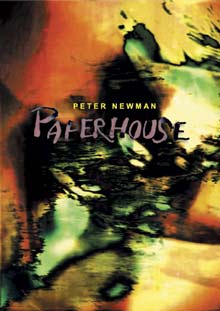
paperhouse.jpg Disc 002 on Sydney’s Demux label, Peter Newman’s DVD debut covers an hourlong documentation of his audiovisual practice from 2003-2007. Cutely for a DVD, it’s tracklisting offers both a Side A and a side B, each covering material from Newman’s exhibitions, performances and installations. From the get-go we’re left swimming in abstract textures, Newman’s style reminiscent of the flickery film pioneers such as Stan Brakage or Len Lye ( a New Zealander with a major retrospective including kinetic sculptures coming up at ACMI next year ). Whereas these filmmakers sought to produce cinema by directly interacting with the actual material of film – by scratching and painting on it, by applying processes of decay and physical mutation to it – Newman explores some of what is inherent to digital cinema – the blending modes available for overlapping pixels, the fuzziness and grain found with various compression methods, the masking and keying out of colours, the blending of layers. While youtube demonstrates that the moving image doesn’t have to have glossy high resolution to be compelling, Newman reminds us that the types of compression artefacts usually associated with youtube, and typical of digital video, can also be played with and celebrated, a textural avenue of exploration in themselves.

( see also : wade marynowsky dvd review )

Review: Wade Marynowsky : Interpretative Dance

Monday, February 25th, 2008

Experiments in Real Time Audio Visual Performance 2002 – 2007
geek_swampyy.jpg

Another experimental DVD available for click-purr-chase, hailing from Sydney label DeMux. Label founder, Wade Marynowsky, is no stranger to the live manipulation of screen and sound. Way back in the twentieth century he used custom made applications built with macromedia director to bang out sets of speaker crunching live cinema – lo-fi graphic animations married fantastically to the language of layered audio loops. Future explorations using software such as NATO, Max/MSO and Jitter delivered ever more sophisticated processes and audiovisual relationships, but the Demented Australiana theme stayed with him : native flora and fauna reinterpreted through the noise of the digital.

It’s a disc of gorgeous stuff, and so even though the boy’s shunning the AV limelight for a while (to pursue an obsession with building robots), the disc neatly encapsulates his diverse mutant flavours spawned over the last 6 years. Rewinding to one of the earlier pieces, ‘Apocalypse Later’ feeds us Australia’s history of violence in a haze of abstraction and digital decay. Landscapes ebb and flow in and out of comprehension, close-up plant textures scratched up and layered as though to reveal their underbelly of corrupted data. The building sonic tension never relents, albeit in a Gameboy edition of ‘Picnic at Hanging Rock’ kinda way. With the visual crackle of bush campfire, we are surrounded by flapping birds squawking to each other through vocoders. Convicts are lashed ( video footage from the now defunct convict theme park ‘Old Sydney Town’ ), stormy skies are mustered, and nature’s cruelty and splendour is displayed in equal measure.

The ‘Uranium Country’ and the ‘ISEA Baltic Sea’ performances document further interrogations of the above palette, as does ‘The Geek From Swampy Creek’ though attempting to transcend laptop performance limits by introducing live imagery of a costumed Wade into the mix. All three pieces exude Wade’s strong sense of both musical and visual composition, fluid manoeuvring providing ethereal transitions through his material. The boy has obviously mixed a lot of audio and video in his time ( and indeed, spotted some of my own footage in there from video jams with Mr.Wade ).

‘Autonomous Improvisation’ eliminates the performer entirely. First exhibited as an installation in Artspace in 2007, it exists as a stand-alone piano, which has been programmed to generate a random series of notes, each of which triggers a pre-recorded video of a Sydney artist playing their instrument. It’s a stellar cast of sonic freakery – featuring Singing Sadie, Toecutter, Wade, Lucas Abela, Shannon O Neill, clown turnablists, saxaphonists, celloists and a variety of surreally costumed performers. In other words – a ghost pianist in a saloon bar is triggering a fast sequence of holographic musical performers above the piano. Bring on the robots!

More : “>http://marynowsky.net ( includes 8 x early mp3 demos. )

( see also review of : Peter Newman’s Demux DVD release )

The Sweet Ableton Live 7 Suite : Review

Tuesday, February 19th, 2008

Choose the ‘Ableton Suite‘, and alongside Ableton Live 7, you’ll receive a swagger of new audio production tools. Naturally, all of these will integrate seamlessly with Ableton’s deservedly championed interface and work processes. For audio-heads, this latest bundle is truly an ‘embarrassment of riches’.

The New Flesh:

abletonsuite.jpg
Three Collections of Instruments :

Tension - physical modelling string synthesiser – which means massive variations and otherworldly string sounds are possible.

Electric - classic electric pianos with physical modelling synthesis, allowing to dive inside the guts of the instrument.

Analog - emulates the unique circuitry and irresistible tweakability of vintage analog synthesizers.

Two Drum Collections :

Drum machines - classic drum machines, sampled to reproduce, with additional features not in the originals.

Session drums ( boxed version only ) – 28 Gb (!!) of quality drum sounds, multisampled in various ways, thereby offering a studio engineer level of refinement.

Operator - a software synthesiser designed to match the best of Robert Henke’s hardware synths, and integrated smoothly into Live.

Sampler - a software sampler with powerful multisample playback and import, and innovative sound design capabilities.

Live 7 Core Enhancements

Live 7 sounds better and it’s timing is more precise – there’s a new high quality compressor, a 64 bitmode EQ Eight, improved midi timing ( esp. when recording midi in Live ) and an enhanced audio engine. Live 6 sounded good to me, but the new compressor and EQ do sound tangibly better. Both the arrangement and session view timelines can now deal with multiple time signatures within a single live set. REX files can now also be dragged, dropped and played just like WAV or AIFF files (Recycle from Propllerheads converts audio files into REX files – which allow flexible retiming manipulations). Operator, Dynamic Tube and Saturator now feature optional High-Quality modes. Memory management has been enhanced to allow smarter use of large sample libraries ( such as those above ). And there are many, many other incremental improvements, but also some brand new pleasures.

Live 7 New Features

You can now view a spectrum analysis to pinpoint frequencies, gently nudge the master tempo ( useful for adjusting between tracks of different tempo ), insert physical instruments into the Live workflow like plug-ins, all of which is useful – but not nearly as cool as the brand spanking new Drum Rack feature. A single right-click on any audio file, offers the option of slicing the file up into different sections and instantly assigning these to a set of pads, arranged in a square like an MPC style sampler. Being designed by Ableton however, this simplicity is deceptive – each pad can actually contain a whole range of effects, instruments and presets ( meaning each individual sound slice can be treated very differently ). A MIDI clip is created for this collection of slices, and will play back each slice sequentially so the sample sounds the same. Shuffling the midi slices around however is a breeze, allowing beats and soundslices to be reshuffled in typically smooth Ableton fashion. Files can also be drag-and-dropped onto the pads, and REX files can also be used. And there’s much, much more to the Drum Rack, flexibility, complexity and power densely packed in.

abletonlive7.jpg

Ableton + Video

Ableton 6 introduced the possibility of importing video onto a timeline, mostly to help film soundtrack producers, allowing them to better match soundtrack elements to a videolip. Ableton 7 introduces the capacity to export video clips, including those which have been edited or warped by time – which perhaps marks the beginning of Ableton Live as a video editing or video production tool of sorts. Ableton’s sequencing and timing controls also address a feature lacking in all VJ apps – decent sequencing. Real-time video software has developed rapidly in recent years and now includes many of the different flavours of crazy that audio software has enjoyed for years – but no sequencing. As a result, many synchronised audiovisual performers send some kind of midi signals from audio applications, to trigger video clips within video applications. Ableton Live is usually the preferred application for live audio and midi in this context, and the last year has seen plenty of hacks with various techniques and plugins to try and deal with the many difficulties still existing in this process.

( The CreateDigitalMutants have been steadily documenting one of the best collections of the weirder options with Live. )

Ableton Suite Requirements?

649 Euros ( or half that for students / educators )

Mac: G4 or faster, (Intel Mac recommended) 512 MB RAM (1 GB recommended), Mac OS X 10.3.9 (10.4 or later recommended), QuickTime 6.5 or higher, DVD-ROM drive

Windows: 1.5 GHz CPU or faster, 512 MB RAM (1 GB recommended), Windows XP or Vista, Windows compatible sound card (ASIO driver support recommended), QuickTime 6.5 or higher, DVD-ROM drive

VERDICT ?

The Ableton Berlin kids are still slaying with this release. They’ve refined and extended the features of the application, integrated new instruments and processes, allowed ever more complex workflows and at the same time have managed to retain a smooth and consistent interface. When it comes to real-time audio – there’s really nothing else in town.

Ableton Live 7 Tutorials

http://www.ableton.com/tutorials ( how to rewire Live with other audio software, abundant tips, tricks, techniques )

http://www.ableton.com/movies ( useful video run-throughs )

http://www.ableton.com/pages/forum ( Giant community of Live-hackers, tinkerers and problem solvers )

http://www.ableton.com/artists ( Explore how plenty of big names are using it )

ableton tutorials on youtube

eg drum racks video.

Different approaches to using Live – ‘Draggers vs. Set-freaks‘.
livetweak.com host forums, as well as ‘custom Live instruments’ uploaded for sharing
eg “Glitch Rack – Rack Patch by 3rdordertrauma: For all the fans of glitchy random broken beat kinda sounds. And for those of us who don’t have the “Glitch” plug cause we are on mac os.”

remixmag.com/abletontipstricks, ableton-live-fans.com/forum : Warping Accapellas, Using groove shadows to spice up drum loops, Isolating vocals and sounds using the Ableton Live Utility plugin, VST Synths with polyphonic arpeggiator?, Live with MsPinky & more. loveableton.com, abletonlivedj.com/forum, 4 hours of Live video tutorials , Ableton Live 7 – Slice to Midi video, it just doesn’t end.

Useful Plug-Ins

Just Add Music is your new powerful visual companion for Ableton live 6/7 on Mac OSX 10.4/10.5, from creation to production to performance Just Add Music takes you into the new audio visual DVJ world. All by using Ableton Live exactly like your used to.”

The Smart Electronix crew maintain a good collection of donationware VST + AU plugins for both mac/pc.

The Plogue Bidule Peeps also a do a range of free VST plugins ( mac/pc ).

Mangle, glitch + FSU in Live

Via Kyle ( thanks ) – Tobybear has some fantastic ( PC only) VSTs that have been around for a while. One of his that I use a lot is Peakfreak, an audio to midi converter. Great if your VJ app does not have something like this built in (and also good for AV with Live + Video app).

AND-D-D-D – this’d seem to be the mother-lode for mac-based VST / AU plug-ins… lots of other free mac audio tools here too… bring it!

Please Holler ( via the comments ) if you know of any useful / weird / great VST or AU plugins that help transform Live for you, especially any in relation to synchronisation with video and VJ software, and esp mac-compatible and I’ll add them to the list here…

(Previous skynoise review of Live 6 )

Robert Henke Dizzies at Planetarium

Friday, February 8th, 2008

monodome.jpg

“The history of immersive projection dates back many thousands of years. From the earliest connections visualized between radiant points on the celestial screen, humans have projected literal or metaphorical devices through their imaginations onto the vault of heaven.”
– from http://elumenati.com, a company dedicated to the art of domed projections, featuring video artist Johnny DeKam ( founder of vidvox + vdmx vj software).

From the Top Of The Dome

Surround sound, a 3-4 storey high dome, lay-back seating for around 100 and a bunch of sonic maestros fiddling about under the simulated heavens. Such is life at the Melbourne Planetarium( On the evening of Feb 2nd, 2008 anyway. ). Nat Bates of Liquid Architecture started the evening off with a granular deconstruction of classic rock songs. Never heard enough to recognise the riffs when the sound was stripped back to raw guitar, but a nice enough piece unfolding beneath the dotted stars. Steve Law + Ollie Olsen, veterans of sonic mutation, followed next with a textural exploration that flirted with percussion by it’s close. Performing as the Mutagen Server, their fluid interweavings were accompanied by films on the dome by Sonia Leber + David Chesworth. Drone based noodling isn’t for everybody, but a novel setting like this is more forgiving than most places. A short break and then..

Robert Henke introduced his hour long piece, Layering Buddha, by explaining how the Chinese music group FM3 had made this ‘Buddha Machine’ that he loved, a small electronic device that played 9 different mantras. As it turns out, their cheap electronic manufacture means tha the machines played side by side develop all kinds of layers and inconsistencies, which Robert ( aka Monolake & the creator of Ableton Live ) recorded, relayered and remixed to produce his Layering Buddha album. Performed live, we get super-rich textures that ebb and flow, a slow sonic choreography over the hour, matched by a gradual shift overhead of the stars set to Melbourne at the start, and Robert’s Berlin by the end. The gentle shifting of the stars proved somehow soothing, but joltingly interrupted 3/4 of the way through when a large black rectangle appeared in the sky. Either one of the projectors had crapped out or a great piece of German minimal design, it felt like a building ( or black Kubrick monolith ) was falling through the sky, created a surprisingly real presence overhead. Minutes later the direction of the star movement reversed suddenly and sped up dramatically. The top edge of the wall beneath the dome, effectively a horizontal line around the room, suddenly started swinging wildly like a boat edge in heavy seas. The music faded out shortly after, but the star movement continued to shift directions, and no-one said a word, content to be there floating in space. (see also )

More Domes

elumenati.jpg
Vidvox founder Johnny DeKam now uses his videoprogramming and VJ chops bending pixels to fit on domed ceilings, as part of the Elumenati crew. Rather than the multiple projector installation at the planetarium, they work with single projector solutions for immersive environments, using Omnifocus fisheye projection systems to project without need for edge blending or alignment.

Also dedicated to panoramic projections is Chromatouch ( found via cdm ), a blog by Leon Trimble (UK), which includes the following breakdown of the core issues involved with immersive projections :
1) choreography of the camera – (thinking outside of the frame, editing for immersion, precise control of actors/dancers/camera in an inescapable environment, wearable computing/camera )
2)capture of 360° video – (camera arrays/stitching, fisheye lenses, ultra hd, telematics, mimetics )
3) presentation of 360° video (dome structures, customisable distortion maps for ‘generic’ rooms, edge blending/masking, projector arrays, fisheye projection, kinesthetics, viewer tracking/perspective shift )

And Spheres

Musica universalis ( or ‘music of the spheres’) is an ancient philosophical concept that regards proportions in the movements of celestial bodies — the Sun, Moon, and planets, as a form of music. This I discovered within Walter Murch’s delightful book about editing, sound, cinema – In the Blink of An Eye. Editor on the Godfather series, Apocalypse now and The Conversation, Murch has plenty of incredible experience and anecdotes to pass on, but comes across as an incredibly curious character who draws on a huge breadth of human knowledge to inform his editing. He recommended The Music of the Spheres : Music, Science and the Natural Order of the Universe, by Jamie James, which amazon.com’s secondhand section finally delivered yesterday.

Visual Melbourne

Friday, February 1st, 2008

Gathering links for a visitor makes you realise it’s quite the city for eyeballs, old Melbourne town.

Australian Centre of Moving Image
: Usually has a few exhibitions / screenings, the free Christian Marclay exhibit currently exhibiting is available until February 3 and has several cool AV collages worth checking out. The nearby Federation Square public screen often hosts interesting public screenings too.
citylights.jpg

City Lights Project

Across the road from ACMI, is Hosier lane, ever drenched in graffiti and stencils, and host to a monthly laneway exhibit hung high and illuminated in light boxes. Also located in another CBD lane, Centre Place.

Stream Collective : live A-V performances, adventurous sound, screenings and installations.

Stencil Graffiti Capital Hearts Melbourne. More stencilly stuff.

Pecha Kucha Melbourne : Series of rapid-fire design and graphics presentations by wide range of melbourne visualists.. with big audiences, big design social event..( next event mar 19 ).

Forepaw : Shopfront in Northcote transformed into gallery, venue, comic + illustration jam nights and much more.
Just missed ‘Trails’ http://forepaw.org/trails.php group drawing jam night ( Tue Jan 29). ( “Bring pens. And beer”).

Sticky Institute : Zine store and seller of much lo-fi and rad print stuff.

Is Not Magazine : Maybe you’ve seen that giant one sheet magazine that gets printed in colour XXXL and pasted up on walls around the city? This is it.

Comic’s Lifestyle : Lots of the Melbourne comic making massive live here.

Breakdown Press : Local independent publishers of provocative visual material.

Engage Media : Local makers of software for self-publishing video online

Dorkbot Melbourne : Local tweakers of electricity and odd projects.

Footscray AudioVisual Social Club : Regular show and tell events @ Footscray Community Arts Centre.

Tape Projects : a collective of young and emerging artists who champion provocative, temporal, audio-visual works and site-specific performances by our peers in and around Melbourne. ( Also release a quarterly DVD ).

Horse Bazaar : Club with a really, really long video screen that wraps around a corner, and regularly features visual artists.

Loop : Another club with many dedicated video walls and regular visual arts bits & vj projections.

Plug N Play Melbourne : Pixellists and live visual experimenters every 2nd thursday of every month… 201 Smith st, Kent st Cafe, Fitzroy, 8-11pm + free.

Art Galleries? Melbourne has those too. ( 150+ here for starters )

Film Festivals / Open Air Cinemas / Cult film Societies? Try….

Popcorn Taxi, Melbourne Cinematheque, Silver Screen Sundays, The Astor Theatre, Melbourne Underground Film Festival, Italian Film Festival, The Other Film Festival, Melbourne International Film Festival, Bicycle Film Festival, Melbourne Queer Film Festival, Antimatter Underground Film Festival, Rooftop Cinema, Moonlight Cinema, Junkyard Cinema, St Kilda Openair Cinema, Melbourne International Animation Festival etc etc and film festivals every second weekend or so for just about every clump of people big enough to call themselves a nation.

MISSED ANYTHING ?? Throw it in the comments, and I’ll add it on…

UPDATE :

Outpost / Share : last Wednesday of every month at Horse Bazaar. A/V jam night with feat. guests. ( thanks, Boz )

Time Capsules: ‘Screen Gems in Strange Territories’ every Friday 8.45, 127 Campbell St, Collingwood

(found via ‘i flips me lid’ )

AudioVisual Melbourne is a mailing list with frequently posted items about interesting (audio+) visual events in Melbs.

Feasting on Film : Slow Food Festival

Friday, February 1st, 2008

feedworld.jpgSlow food? Supposedly an ‘eco-gastronomic movement that champions the protection of food diversity by encouraging regional production, taste education and pleasure’. Naturally Melbourne has a festival for Slow Foodies, complete with film festival @ ACMI from Feb 25th – Mar 5th.

We Feed The World

Erwin Wagenhofer, 96 mins, Austria, 2005

Wed 5 Mar 2008, 9.30pm

Why doesn’t a tomato taste like a tomato? How does one explain that 200 million people in India, supplier of 80% of Switzerland’s wheat, suffer from malnutrition? These questions and more are investigated as filmmaker Erwin Wagenhofer charts a contentious course through the processes of production of our food from Austria to Brazil, France to Africa. This is a film about scarcity amidst plenty, answering the question of what world hunger has to do with us.

((Saw this at Melbourne International film festival a few years ago – very provocative. Found myself really bewildered while watching it in the middle of a city of 3million people, thinking if all of Melbourne wanted say an egg on toast and a glass of fresh orange juice for breakfast tomorrow, what a crazy amount of food that is to try and provide.. Film’s worth it for the United Nations talker (Jean Ziegler ) in the middle somewhere, who nails a very lucid perspective on the politics of farming subsidies and people starving. ))

The Future of Food

Deborah Koons Garcia, 88 mins, USA, 2004

Mon 25 Feb 2008, 6.30pm

Shot in the US, Canada and Mexico, this film examines the complex web of market and political forces that are changing what we eat and presents a disturbing investigation into the genetically engineered foods that have surreptitiously filled our supermarket shelves. The screening will be introduced by Percy Schmeiser, a Canadian farmer who became an international spokesperson for farmers’ rights during his protracted legal battle with agrichemical giant Monsanto.

One Man, One Cow, One Planet

Thomas and Barbara Burstyn, 56 mins, New Zealand, 2006

Mon 25 Feb 2008, 9pm, Screening introduced by the filmmakers, Tom and Barbara Burstyn.

Peter Proctor is a 78-year-old with a glass eye and partial deafness. He is also widely known as the father of modern biodynamic farming, an arcane form of agriculture. This film follows Proctor’s journey to India where he works with marginal farmers to revive this traditional agricultural method to save their poisoned lands. It exposes globalisation’s mantra of infinite growth for the environmental and human disaster it really is.

Slow Food Revolution

Carlo Buralli, 52 mins, Australia, 2003

Tue 26 Feb 2008, 6.30pm, Screening introduced by Kelly Donati, Director, Slow Food Victoria.

Slow Food Revolution records the growing phenomenon of Slow Food in Italy, Mexico and Australia.. celebrating our natural bounty and a seriously sensual journey from earth to table.

Double feature: Tue 26 Feb 2008, 8.30pm

These compelling stories from Israel and Australia use food to examine the impact of war and conflict on communities.

Liam Ward’s Refugee: a recipe (24 mins, 2005, Australia) is part animation, part cooking show and an exploration of the impact of mandatory detention and temporary visas. ((+ Looks like I’ll be teaching with Liam @ RMIT this semester.. ))

Ayelet Heller’s Strawberry Fields (60 mins, 2006, Israel) tells of the daily struggles of strawberry farmers in the north of the Gaza Strip, whose crop has to be exported to the rest of the world via Israeli-controlled checkpoints. When problems arise, the strawberry fields become battlefields.

food and community – two shorts

Tue 4 Mar 2008, 6.30pm

Faith Morgan’s The Power of Community: How Cuba Survived Peak Oil (53 mins, USA, 2006) tells the fascinating story of how Cuba turned to organic farming and urban agriculture after a collapse* in its supply of cheap oil from the Soviet Union. (( *Hello 21st century ))

Daniele Atzeni’s The Legend of the Holy Fisherman (18 mins, Italy, 2005) spotlights San Pietro Island where tuna fishing has been practiced for hundreds of years according to an ancient ritual.

Black Gold

Wed 5 Mar 2008, 6.30pm

Marc and Nick Francis’ Black Gold (78 mins, UK, 2006) is an eye-opening exposé of the multi-billion dollar coffee industry that traces one man’s fight for a fair price. As westerners revel in designer lattes and cappuccinos, impoverished Ethiopian coffee growers suffer the bitter taste of injustice. Screening with ‘Squeezed: The Cost of Free Trade in the Asia-Pacific’ (40 mins, Australia, 2007). Travelling from the lush rice paddies of Thailand to squatter settlements in a Manila rubbish dump, Michael Cebon and Dominic Allen’s film creates an emotional document of how globalisation affects farmers in the Asia-Pacific.

Also of note – short film festival competition with two categories: best overall film and Soft Boiled Egg, a three-minute film category. Also playing at the festival – artists who look equally at home on a menu, as on a party poster : ‘Melbourne trip hop masters Miso as well as DJs Wasabi and Duck Roast’ – Feb 22, Edge, Fed square.