EBN-Heads : Brian Kane Interview!

EBN_van
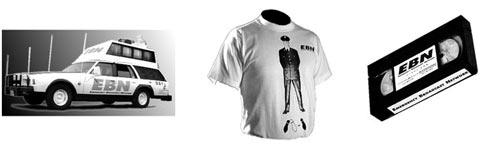
Hey guess what? It’s a thrill to present an interview with one of the founders of E.B.N., pioneers of audiovisual radness, and inspiration to many since way back in 1991. Yeah, those guys beaming their live video sampler performances from a bunch of TVs atop a station wagon on the Lollapalooza tour, the guys that made a video remix ‘album’ from Gulf War footage, and opened U2’s ZOO TV tour. That was E.B.N., and they paved the way for much of today’s live video. Although long disbanded, Brian Kane and the other founders, Joshua Pearson and Gardner Post, have each continued exploring various multimedia technologies ( links to each and more E.B.N. details / videos etc at their wikipedia page ). Brian’s thoughts below.

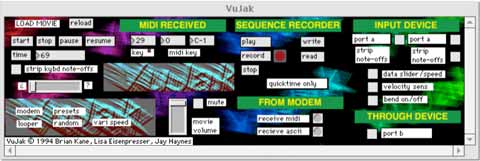
Back in 1992, you invented VuJak, the worlds first video sampler. What real-time video software impresses you today, and what surprises you about the ways video software has developed?

Ableton Live is amazing, and I also like the Pioneer DVJ line. I still use Max/MSP/Jitter because you can do so much and I have worked with it for many years. The Cycling74 folks have done a great job with Max, and Josh Clayton’s Jitter objects are the greatest thing since sliced bread.  I’ve seen some incredible things done with Processing, though I haven’t used it yet myself. What interests there is Mobile Processing, I am more and more interested in mobile/handheld video applications.
vujak

YouTube is now serving 1 billion video views a day, so it’s hard not to be impressed with YouTube. They got it right, and they continue to drive video usability, which has helped make online video become so popular.

One of the main goals of making the video sampling tool was to give people a way to deconstruct/reconstruct the media. When you deconstruct television, it helps you see how messages are created and used to manipulate peoples emotions. So I had always seen VuJak as a counter-ops measure to help the public fight back against manipulative media and propaganda. This has certainly taken hold in the laptop era and in the modern art world. These days it’s called an intervention, but it’s basically a force multiplier for the public against perception management.

Emergency Broadcast Network left quite a footprint in the live audiovisual arena. What extent of your original video sampling vision did you manage to execute?

Video sampling and cut-up is mainstream now. Yesterday I saw a segment on CNN called Mashup where they cover remix videos on YouTube. Remix culture has become its own art genre and has been pushed beyond anything I had imagined in the early 90’s.  There are some very talented artists putting their work on YouTube – such as Kutiman – which blow me away. Auto-tune the News is great, too.

The same is true for the generative school of video art, too. It has become mature as a genre and and the tools are robust. So now we have the tools to do anything, but what should  we do? So now I think it’s all about content.

For me, the big “oh yeah” moment was in 1991 when I managed to get a quicktime movie tied into Max. The first time I pressed a midi keyboard note and saw a movie play, I knew it could be done.

What are your thoughts on today’s live audiovisual acts, or the evolution of AV performance? What has improved? What has stagnated?

My favorite recent live acts are Addictive TV, ColdCut, Hexstatic, eXceeda.  DJ Yoda is amazing, I wish I could’ve seen him with Shlomo. The production quality of shows has improved vastly, and there is essentially no barrier to entry as well, which means there are lots of people doing it, which I believe is a good thing. Audience interactivity in live shows hasn’t yet taken off on in a big way, but I could see that happening now, since everyone has a cell phone. My only criticism these days is that I think it’s boring to watch two guys fingering their laptops on stage.  I’m guilty of this myself. But I’d like to see more fun presentation styles for live shows. There’s a lot of room for fun input devices using things like Arduino boards and such as well, too.

What do you see as the various interesting trends amongst live video at the moment?
I’m fascinated with the new micro-projectors that are coming out, and expect to see interesting innovations there. Also of personal interest is optical mixing with multiple projectors, as well as L.E.D. architecture. I want to play Pong on the side of a mountain.

What did you learn about humans and technology from your online casino days?
Humans are unpredictable as individuals, but predictable in groups. People don’t mind losing money if they are having fun. 1 attention unit equals 7 seconds. People prefer playing with a machine to playing with people. 1 button is enough.

What about commercial holography, where has that gone since the early nineties?
The latest generation of large scale full-color holography is truly impressive.  Zebra Imaging produces the best in the world. Full color, full parallax. Optical computing is progressing rapidly, too, which will bring about the next major advance in computing.

And to continue this techno trajectory of art forms you’ve been involved with, what were you doing with robotic software?
In 1994 I started to believe that the screen image is useless – meaning that people have become numb to video images and that there is simply no way of communicating with people in a meaningful way via screen images. This is a deep and long conversation, and in many ways I still believe it is true. So I stopped working with video and became interested in building physical experiences for audiences – moving objects in the real world that people can have a relationship with.

At that time, I met artist Chico MacMurtrie who was building robotic sculptures, and we started to work together. George Homesy had build a midi-to-voltage control box for the machines, but the software piece wasn’t robust yet. I wrote a variety of max patches which control the machines and sequence them into shows. Some of the machines required feedback to operate and so we needed an intelligent system to drive those, while at the same time allowing for improvisation within the framework of a master sequenced show. We toured extensively in the 90’s with a large show, and over time this became a rather complex system, all built with Max.

I continue to work with Chico to this day, although the latest piece, the Birds, is an autonomous installation piece.  There is more information on my website and on http://amorphicrobotworks.org.

What kinds of ideas are you hoping to provoke with your sculpture series?

I’m interested in taking the virtual experience into the real world.  Creating physical manifestations of our shared virtual experiences.

I see these as documentary objects which capture a common cultural snapshot of the present and preserve it for the future. As our present shared virtual culture decays though continuous obsolescence, very little remains beyond its’ designed 18 month life cycle / memory cycle.  So by physicalizing these experiences, we can archive them for the future.

As people switch off their televisions, projects like wikipedia spawn from their free time. Or like Urban Dictionary, which I noticed you’ve been contributing to. What draws you to that, and what are some projects that point to more interesting group dynamics and collaboration?
I’m drawn to Urban Dictionary because it is funny as hell.  I went through a period when I was putting in words, but that seems to have passed, like most transient newisms these days.  One of my entries was Urban Word of the Day, so I guess that means something.
Flash mobs are another great new form of collaboration, as well as local currencies.

Three things you’d tell a class of young interactive designers today?

Fast. Fun. Easy.
Design for humans.
Pay attention to the way humans behave. Watch what people do.
If an application is pretty, people are impressed for a few moments.  If an application is useful, people will use it repeatedly.

Thanks Brian!
Plenty more to visit over @ slashboing ( eg speed baraka / double game / meat water / HDADD™ – Attention Deficit Cinema / etc etc )

by Sean Healy, October 23, 2009 7 Comments
Where The Wild Things Link To

maxonwire
The Spike Jonze and Dave Eggers film adaptation of long revered ‘Where The Wild Things Are’ is almost out, and part of their promo blitz includes what turns out to be a really great blog ( weloveyouso.com) – one that aims to shed light on some of the influences that’ve helped make the film happen, but ends up pressing so many kinds of resonant buttons, it may as well be a drunken gypsy piano accordionist eloping with a QWERTY keyboard.

Lightning Bolt Down Under
Drummer and bass player duo with a supposedly religious experience type live show, they are touring Australia in late November ( Bring The Noise! ), and get mentioned at weloveyouso for a recent video clip which features someone dressing up in a home-made Wild Thing costume (DIY music video wardrobe stylists, rep-re-sent! ) and wandering ( veering madly all over the footpath, scattering people as they go ) through the streets in stuttery stop-motion style ( which suits the song to a tee ). Release dates mean that by the time Lightning Bolt are touring Oz, the only way to have seen the film locally will have been by the inevitable cam-held recordings made in Northern hemisphere cinemas, and released as torrents online. We get it in cinemas in Dec in Oz, but really – what’s with release dates a few months apart in the 21st century?

Paper Rad
– are an art-flouro collective whose output seems to alternately thrill and revolt, and amongst their posse is Jacob Ciocci, who has a new 45 minute DVD-R out ( Peace Tape ), with soundtrack by Extreme Animals. This is discovered of course, through weloveyouso, alongside an interview snippet with Ben Jones, another artist in the ‘Paper Rad Orbit’ :
“Any really good artist, or just any happy smart person can explain quickly and simply why things like fame, or the art world, or war are essentially meaningless and then also how these things attract young stupid white kids, or people with mental problems, or classic Americans as a result of the of these populations having low consciousness and/or intelligence. If you really are into the art world or TMZ or the Taliband it means you have a type of retardation.”

Web Cam Synchronicity
Weloveyouso posts stem from a variety of folk, but occasionally from director Spike himself, including a link to the recently popular ‘Sour’ music video which was shot by people all over the world on their webcams. It’s an incredible video, full of relentless ingenuity and all made with tightly interwoven webcam contributions from a large number of people. So it’s hardly surprising people have been linking to it everywhere, but it must be nice for the producers to read Spike Jonze write :
“The amount of pre-planning and choreography by the directors Masashi Kawamura, Hal Kirkland, Magico Nakamura and Masayoshi Nakamura remotely from the other side of the world is of Michel Gondry level complexity.” Which in turn is followed up with an interview about how they made it. ( Zero budget filmmakers win the day (again)! )

http://threeframes.net/
Got hooked on this a while ago. Click. Click. Click. A sea of next pages to be explored, each with animated GIFs made up of 3 frames from a movie scene, micro-stroboscopic events that say so much and so little. Thanks for the reminder Wild People.

Wild Things Skate
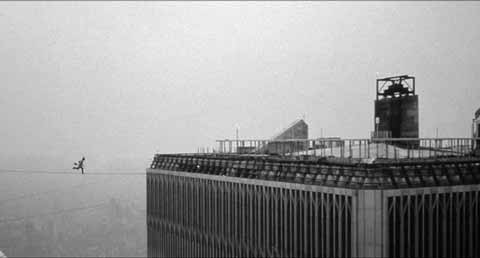
Well directors of such films do anyway, how else to amass a crazy back catalogue of genre-stretching skate videos, and count the likes of the infamous Mark Gonzales amongst your friends. Inevitably Mark gets mentioned a few times, including this link to an art gallery video, where he had invited to exhibit work, and ended up dressing up and skating at high speed in a variety of goofy poses around the gallery and it’s audience, at times blasting coffin style through a tunnel made from cardboard boxes. No chardonnay seemed to have been spilled during the making. Unsurprisingly there are also a range of Wild skate decks available, which Spike decided to give away a set of for the best movie poster mash-up. Max On Wire, featuring a tiny silhouetted Max racing along a tightrope between the two world trade towers was a particular favourite.

And Sure, More Self-Promotion
But aren’t you curious about ‘a book by Dave Eggers adapted from Maurice Sendak’s Where the Wild Things Are and based on the screenplay by Eggers and Spike’ ? And isn’t it refreshing to see movie-makers that actively encourage movie-poster remixes? And if moviemakers must show photos of their new movie billboards, it’s refreshing to see the director exclaim that he loves the graffiti modifications people have done to it, and looks forward to seeing more people painting over them.

by Sean Healy, October 22, 2009 2 Comments

Electrofringe 2009 Highlights

Another year, another super-soaking of inner Newcastle with a spray of the bizarre to the sublime. Density of programming, and that everything happens alongside the National Young Writers Festival, Sound Summit ( a gathering of independent record labels and artists), Critical Animals ( post -grad theory critters), and The Crack Theatre Festival – means everyone’s festival is quite different, the following of one path denying the surprises that thrilled others elsewhere. These are the shards that stuck to me.

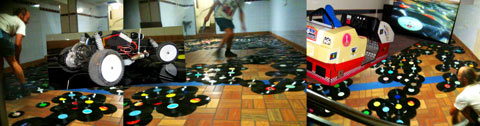
The Vinyl Arcade by Lucas Abela* (aka. Justice Yeldham aka DJ Smallcock )
Upstairs : Sit in a dodgem car and watch the results of your steering, on a projector screen ahead of you.
Downstairs : A remote control car with record needles underneath it, zooms around a floor made from vinyl records all over the ground.
The mind’s ear might like to imagine this process resulting in distinct grabs of music being pumped out of the speakers – a little Stevie Wonder here, a little classical violin there, but the actuality was more akin to a stuttering noise orchestra. Didn’t seem to matter though, delightfully executed : simple, ingenious, stupendous.

* Experimental turntablism eh? Try : “stabbing vinyl with Kruger style stylus gloves, bound on amplified trampolines, performing deaf defying duet duels with amplified samurai swords, hospitalised by high powered turntables, record chance John Peel sessions with the Flaming Lips, and most recently touring the world armed with nothing but a sheet of glass.” Guess we can add remote controlled cars on vinyl racetracks to that list. Toecutter in assistance below.

vinyl_arcade

The Church of Pimmon
A former church is the head quarters of the Renew Newcastle project, whose 30+ empty shops now inhabited by artists and galleries certainly added to the festival’s saturation of the city, and it was in this highly appropriate venue, that Pimmon delivered a beautifully surging and serene performance ‘like a slow-motion whitewater torrent.. in space’. Even included some laptop microphone vocal work towards the end, albeit just one subdued layer rippling amongst the haze. Gorgeous. ( Listen to his weekly ABC radio show: Quiet Space, Pimmon on twitter, and audioboo – an iphone audioblogging tool )
pimmon_at_church
Let’s Paint TV
John Kilduff’s blurb:
“Host of, and genius behind, the art damaged Los Angeles public access program “Let’s Paint TV”. He teaches you, the viewer, how to paint, blend drinks, and keep yourself healthy all whilst jogging on a treadmill. Kilduff believes in breaking down the barriers between art and pretty much everything else, in the ultimate aim of embracing failure.” Add 25 people in fluorescent clothes, buckets of paint and foodstuffs, a loud sound system, and put them all in a small glass room, and mix heavily. This happened twice daily.

Wade Marynowsky’s Dancing Robots
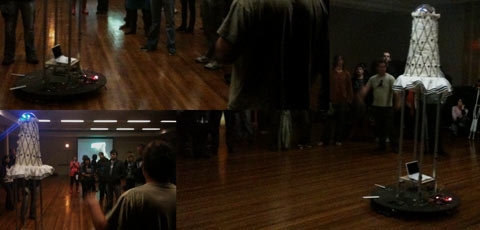
Great to see one of these ‘in person’. As well as witnessing it in action, Wade gave a great talk, aided by his electrical engineer Aras Vaichas, about the process of building 8 robots that could detect audience members, dance around them, and occasionally fire lasers directly into their souls. Or just y’know, spook people with seemingly intelligent commentary / engagement. ( More : http://marynowsky.net/ )
waderobot

Screenings
The Japan Media Arts Festival 2008 animation program was awesome – virtuoso technical animations, but also relentlessly imaginative and diversely themed. ( )

Electro-Projections curated by Michael Prior and Matthew O Shannessy, featured a great selection of unusual and engaging work ( eg the humourous abstractions of Justin Kelly ). Getting a particularly strong crowd response was Skate bang by Damon Packard, an absurdist piece that reveals the power of the edit – cutting between close-ups of snipers shooting rifles, and skaters falling over on handrails, never seemed to wear out it’s welcome, even if the clip is nearly all punchline. Apparently he got an inheritance sometime ago, and decided to spend it all making and remaking films, sending a few thousand DVD’s of them out to random celebrities as well. Aaaaaaaaanyways…

Gig Highlights
DJ Ripley! Fave act of the festival! ( aka Larisa Mann aka PhD Candidate on the social implications of copyright aka just listen to her mixes! ) She seemed to enjoy the festival too… and plays Melbourne this Friday 9th @ Roxanne Parlour.

Bum Creek
– Performance art? Music? Elaborate prank? Crowd ate them up naturally.
Qua – Featuring Laurence Pike on drums, James Super Melody and Cornel on electronic wizardry, reliably engaging, definitely won new fans over.

Not Enough Hours in the Day
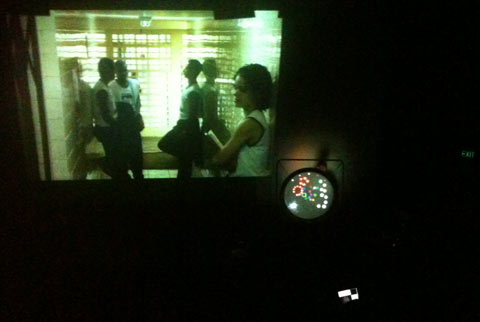
Ok, so I missed the zombie rights march, the carpark ghetto aerobics ( well, it was on Sunday morning, the Sabbath! ), the zine fair ( usually such a great selection of DIY comics, books, CDs etc at this ), The DeConverters ‘Witness in the Wall’ project ( combining surveillance cameras and theatre ), a session about how video in theatre was bad ( ie lots of room for reinventing it ), and scheduled at the very same time as I gave a presentation about ‘opportunities for real-time video’, there was actually a Brazilian live cinema practitioner giving a talk somewhere else ( Bruno Viana made 2 feature films, and uses this weird circular interface beside the screen to let the audience see how his live editing process is reacting to them. Hope to interview him later on. )

brazil_live_cinema
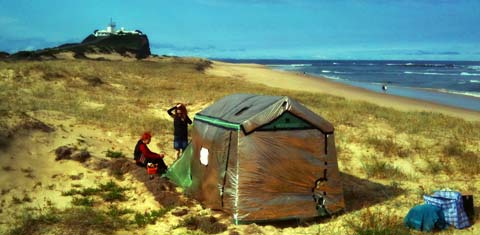
Speaking of ‘blurred and frozen time’, I also missed Katherine Bennett’s exhibition, but over a chat with her ( Assistant Professors of Physical Computing, Rep-re-sent! ) on the way to the light-house, managed to catch Mika Meskanen‘s Temporary Sauna, a square roomed tent nestled amongst the sand dunes, with chimney, makeshift oven and sauna rocks.

temp_sauna
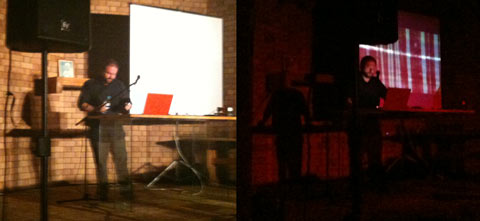
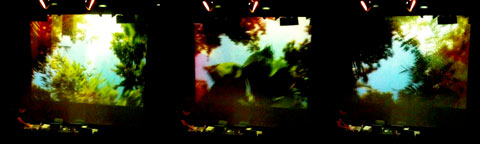
Below, Indonesian trees testing the screen before my audiovisual performance with Dan MacKinlay ( am going to write some more about that later, particularly the Indonesian part of the set, which was based around a performance we did at the OK Video festival in Jakarta in late July 09 ). To the side, Brisvegan Tom Hall setting up for his audiovisual performance later ( which was nicely engaging for such an abstract piece ). Swiss sound artist Gilles Aubry also performed that night, a quite loud meditation on ‘planes’.

EF09_avset

by Sean Healy, October 9, 2009 1 Comment

Werner Herzog’s Fight Club

Elsewhere. Meanwhile. Would you believe that German film director Werner Herzog has invited you to study with him? BYO bullet-proof vests.

“The Rogue Film School will be in the form of weekend seminars held by Werner Herzog in person at varying locations and at infrequent intervals. The Rogue Film School will not teach anything technical related to film-making. For this purpose, please enroll at your local film school.

The Rogue Film School is about a way of life. It is about a climate, the excitement that makes film possible. It will be about poetry, films, music, images, literature. Excerpts of films will be discussed, which could include your submitted films; the attention will revolve around essential questions:

How does music function in film? How do you narrate a story? (This will certainly depart from the brainless teachings of three-act-screenplays). How do you sensitize an audience? How is space created and understood by an audience? How do you produce and edit a film? How do you create illumination and an ecstasy of truth?

Related, but more practical subjects, will be the art of lockpicking. Traveling on foot. The exhilaration of being shot at unsuccessfully. The athletic side of filmmaking. The creation of your own shooting permits. The neutralization of bureaucracy. Guerrilla tactics. Self reliance.

Censorship will be enforced. There will be no talk of shamans, of yoga classes, nutritional values, herbal teas, discovering your Boundaries, and Inner Growth.

Follow your vision. Form secretive Rogue Cells everywhere. At the same time, be not afraid of solitude.”

( Previous round-ups of Werner World, for the unfamiliar )

by Sean Healy, September 24, 2009 1 Comment

La Jetee, The Film, The Book, The Implications

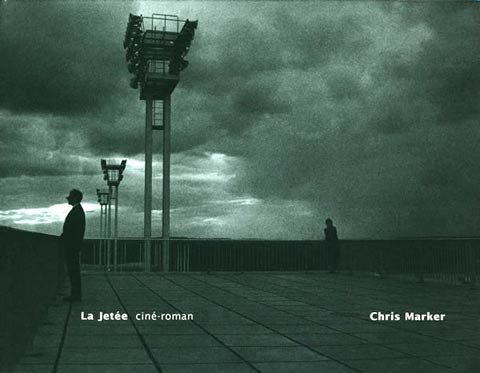
la jetee, a photo of the book of the film
Remember 12 Monkeys with Brad Pitt? That movie was based on La Jetee, a thirty minute film made in 1962 by Chris Marker, a grainy black and white film set in post-apocalyptic Paris. That La Jetee has been a perpetual entry in best film lists ever since is all the more remarkable given it only contains a few seconds of actual motion, the rest comprising of grainy black and white photos of underground Paris, some background music, occasional sound effects, and Marker’s evocative, tightly scripted narration. Aside from the film’s inspiring execution though, it resonates today for other many other reasons:

– The implications for DIY film-making ( ideas are more important than budgets – spend more time developing and refining ideas)
– It reminds, that in the end, technology is the easy part.
– The right text can wonderfully frame and transform images. ( And what does this mean for websites, let alone films? )
– If a film like La Jetee is possible with a hand-held still camera in 1962, what is possible with today’s technology? ( Or – what would a young Chris Marker be making with our abundance of portable recording devices, which are often net-connected, location aware, and without the processing costs of film? )

And sure, it resonates because I bought La Jetee the book recently, after spotting it on a shelf – a film as book – savour the story and cinematography at whatever pace, or in whatever sequence you prefer. ( Available via MIT Press )

“This book version of La Jetée is, to my mind, astonishingly beautiful. It brings a total freshness to the work and a new way to use photos to deal with dramatic events. Not a film’s book, but a book in its own right—the real ciné-roman announced in the film’s credits.”

—Chris Marker

Read about it @ wikipedia
Watch the film in lo-res ( le horreur! ) on youtube
Watch the film of the book of the film

by Sean Healy, September 24, 2009 0 comments