
Sidebar Header

Sidebar Header

Sidebar Header

Sidebar Header

    Sculpture, Everything, Op Art in Visual Chinatown, DJ Yoda

    Some February eyeball snippets..
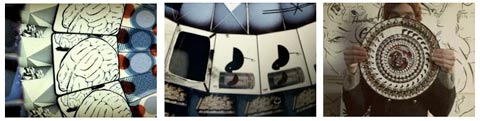
    sculpture_uk
    Sculpture
    http://tapebox.co.uk
    http://vimeo.com/sculpture
    Dan Hayhurst: Music, Reuben Sutherland: Animation
    “DIY music and animation duo, who use zoetrope record deck, tape loops, cassettes, samples, and lo-fi electronic noise, cross-fertilizing analogue and digital techniques to generate vivid sonic and visual collages.”

    Sculpture are one of my favourite discoveries of late. Notice the words ‘zoetrope record deck’ in their description? Those custom made picture discs ( just a sequence of images arranged around a vinyl disc and filmed from above ) definitely help define their aesthetic but there’s much more going on than that. Glimpse a few of their animations and live performances to grasp some more.

    Everything
    http://vimeo.com/6364896
    A vibrant array of visual creators constantly pump out material on vimeo.com, so even casual exploration of the site usually brings some rewards. It’s especially nice though, to discover delights in clusters, masses of talented folk orbiting around one of vimeo’s groups or channels. Such as the awesome compilation ‘Everything’, curated by Danny Jelinek, each episode tending to feature 5-6 snappy segments, sharp editing and humour, and sophisticated but whimsically used visual effects.
     
    Op Art in Visual Chinatown

    davidope
    davidope.com
    http://dvdp.tumblr.com
    On the optical art front, albeit with a more contemporary feel, ‘davidope’ creates hypnotic looping animations, which he offers up as a series of tumblr gifs ( hosted at what he calls his ‘visual chinatown’), or java apps / quicktime movs for those inclined. His recipe?

    1. I create a simple animated 2d looped pattern in Flash or with Illustrator+Javascript.
    2. Then I use them as a displacement/diffuse/alpha map for a static 3d object in 3dsmax.
    3. Rendering it with Vray or Illustrate.
    4. Finally converting it to GIF with Photoshop.

    DJ Yoda 
    dj_yoda
    www.djyoda.co.uk/
    youtube.com/user/djyodauk

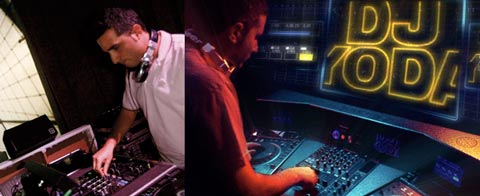
    Belated shout outs to DJ Yoda, who toured Australia in late December. Admittedly I was skeptical after glimpsing a set portion online a long time ago ( too obviously cut and paste in that mid-late 90s way, with little sampling subtlety in the choices or choreography), but for the sonic and visual heads in the audience alike(@ Falls festival) yoda ‘ripped it’, constantly weaving through pop culture grabs with fluid, sophisticated ease. This included a range of recently new worthy items as well as an extended encore of contemporary Australian TV.    

    Apart from busily honing his live gigs, DJ Yoda also recently contributed to the DJ Hero game ( Playstation, XBox, Wii ), offering up two mixes for playing : Jackson 5’s “I Want You Back” vs. Gang Starr’s “Just to Get a Rep”, and Little Richard’s “Tutti Frutti” vs. Shlomo’s “Beats”. As an aside – has anyone ever used this? The game made a lot of splashes on release, but I haven’t heard from a single user of it since, or even seen anyone pointing to an interesting video of it (or it’s turntable controller ) in action. Meanwhile, ‘Scratch, The Ultimate DJ‘, being developed by Bedlam games and delayed because of legal troubles, is now back on track – with tracks by Mixmaster Mike, Kid Koala, Gorillaz, Salt N pepa etc. Stay tuned.

    Patrick Farley + The Attack Of The Drones

    Pilotless floating killing machines now routinely fly over borders, grim drones of surveillance no doubt predicted by plenty of science fiction before them. The actual 21st century messiness of the drones was best nailed a near decade ago, by Patrick Farley of electricsheepcomix.com.

    spiders

    BackTracking
    Over at No Fear Of The Future, Chris Nakashima-Brown wrote about watching the Alex Rivera film Sleep Dealer, ‘an amazing work of Mexican cyberpunk about info-maquilas and memories for sale in near-future Tijuana’. He goes on to mention ‘one of the more over-the-top plot elements was a reality television show in which viewers help drone pilots select their terror targets’ – a near identical premise to Patrick Farley’s web comic ‘Spiders’ ( which we’ll get to in a second.. ), and which he presumed as far-fetched – before reading a NY Times report about the Pentagon’s struggle to process ‘the huge quantities of data it is receiving from the proliferating network of Predator/Reaper drones patrolling the skies of the earth’.

    You want video data? The U.S. military can give you video data. In 2009 the drones clocked up 200,000 combat flight hours, each generating a constant feed of live video and other data. In 2010, the drones will be able to begin recording video in ten directions at once, 30 directions in 2011 and 65 directions in 2012. Aside from the obvious storage and archiving issues, that also amounts to a serious analysis challenge. How to meaningfully process that much material?

    In attempting to prevent an overload of video collected by the drones, the NY Times wrote that the air force and military are ‘turning to the television industry to learn how to quickly share video clips and display a mix of data in ways that make analysis faster and easier’ through a mix of text, live video, replays, and graphical augmentations of the filmed reality.

    “Imagine you are tuning in to a football game without all the graphics,” said Lucius Stone, an executive at Harris Broadcast Communications, a provider of commercial technology that is working with the military. “You don’t know what the score is. You don’t know what the down is. It’s just raw video. And that’s how the guys in the military have been using it.”

    As Chris saw it, ‘dudes in Department of Defence trailers in Orlando’ aren’t going to be necessarily that effective at analysing the footage from several hundred drones in the air, and suggests a more engaging scenario might be a distributed computing model to fight the war on terror, something along the lines of SETI (where distributed computing power of home computers are used together to help process analysis of signals from space ). As Chris puts it, “allow the private sector to turn the video into the basis of a real-world tactical game, in which teenage boys in suburban Chicago tag the Talis for special attention.” This kinda crowdsourcing was also used in two recent attempts to find missing people ( Jim Gray who went missing off the coast of California, and Steve Fossett whose plane went down in a small region). Making public recently available aerial imagery ( see Google Earth Blog), this was an approach to ‘more rapidly search a large area of imagery using many eyeballs of people around the world’. [ Wikipedia aside : "On May 25, 2007 the U.S. Director of National Intelligence .. authorized .. local, state, and domestic Federal agencies to access imagery from military intelligence satellites and aircraft sensors which can now be used to observe the activities of U.S. citizens. The satellites and aircraft sensors will be able to penetrate cloud cover, detect chemical traces, and identify objects in buildings and "underground bunkers", and will provide real-time video at much higher resolutions than the still-images produced by programs such as Google Earth."]

    Spiders
    www.electricsheepcomix.com/spiders/
    In Patrick Farley’s horizontally sprawling webcomic ( screens aren’t pages! ), the drones crawl along the ground. Rather than swooping planes, swarms of insect robots travel over Afghanistan’s desert mountain terrain, each beaming back a video image for spare-time mouse-clickers to watch and report on. Farley’s still unfinished story has plenty of twists, and tries hard to explore what comics on the screen can be, playing often with various technical conventions of the software he knows users will be reading his story with. Unfortunately the whole story isn’t available for viewing at the moment, while he rebuilds his site ( originally hosted at the domain e-sheep.com, but the domain registration lapsed ), but it’s still worth a look see, and there’s plenty of other webcomics and stories to see there too. Bonus Points? His offering of a ‘List of Story Premises’, free for Creative Commons use, noting “If any of these makes you rich, consider buying me lunch.”

    HackTracking
    Don’t forget SkyGrabber, the software used by Shiite fighters in Iraq to regularly capture drone video feeds. Available from your nearest torrent site.

    Reflections on Live Cinema

    jp | Audiovisual, Cinema, Musings, Software, Video, Vj-ing, electronic art, imagery, online art | Wednesday, 10 February 2010

    tobysoftware
    Long-time live cinema enthusiast, (Toby) *spark from the UK, released a video about it this week, a decent attempt at exploring some of live cinema’s essence. What is live cinema? Who makes it? Why? How? The video features interviews with some live video luminaries, as well as a glimpse at what an ideal live cinema software interface might look like.

    New kinds of cinema will inevitably continue to form and mutate. Video can now be chopped, shuffled and processed nearly as easily as audio, projectors continue to cheapen and shrink, and audiences practically expect moving images to appear in ever new screen and surface arrangements. Live cinema is just one of those possibilities, and within the video Toby explains part of why it appeals:

    “Compared to Hollywood, it’s more like live jazz, a storytellers version.. telling different stories everytime – it’s not because there’s a definitive story, but because it’s more interesting that they have a sea of memories, every story they navigate through the sea making different associations, drawing different things in in different contexts. We can do the same with digital media as performers.”

    Fellow Londoner, Mike from D-FUSE is less drawn to the narrative aspects, but still strongly attracted to what is possible with live cinema:

    “It’s about the feel of it, as opposed to the other side of the tv, telling you a story… it’s about the texture, and the sound, like going back to a surrealist painting… ”

    Toby welcomes feedback on the video, so have a watch and zap him a line. Myself, I think the Live Cinema aspect depends on a lot on context – where is the cinema and who are the audience? In that respect, his video would benefit from showing that better, rather than just clips detached from their screening context and audience. The live clips of the Light Surgeons used work best for that reason, but even then the wider context of the audience, or even audience reactions is still invisible.

    And why does Live Cinema Suck?
    It’s really, really, hard to produce a compelling feature film or create a compelling hour of music. Trying to do something in between both, and without a team of supporting cinematographers, actors, musicians, recording engineers, producers, and without any funds, means it’s a significant project for any solo laptopper to attempt, and yet it is often one or two people who are generally making ‘live cinema’. Playing with video in a more poetic way, and exploring with loops and rhythm, can reduce some of the burden, but it’s still a major challenge. Beyond merely producing a live cinema show though, what are the characteristics of a good live cinema show? And what are the cliches and easy pitfalls for producers? What makes a bad live cinema show? Why is there often a sense that they are fun for the creators but not the audiences? ( The same can be said about drunken bongo playing around a campfire ) Maybe this is a bit like the earliest scratch DJs a few decades ago trying to talk about what a good DJ mix is – from their limited perspective, the evolved styles, technologies and diversities of today’s DJing would’ve been unimaginable. But addressing some of these problems means identifying what works and also what doesn’t in a live context.

    Elsewhere VJ Solu has articulated nicely some of the ways Live Cinema can distinguish itself :

    “The traditional parameters of narrative cinema are expanded by a much broader conception of cinematographic space, the focus of which is no longer the photographic construction of reality as seen by the camera’s eye, or linear forms of narration. The term “Cinema” is now to be understood as embracing all forms of configuring moving images, beginning with the animation of painted or synthetic images…… Even though performance is a vital element in the live context, creating new narratives for visual culture should be equally important.”

    Elsewhere she closes in on an important difference between cinema and live cinema, while showing how one can inform the other:

    “Lost Highway (1997) directed by David Lynch.. is remembered for its long shot of a dark highway. I believe these kind of shots are the basic material for live cinema performances: the transitions, the movements, the pure visual beauty and intrigue, the atmosphere.”

    Or as VJ Iko from Portugal put to me back in the day:

    “Live video is as much about lighting and colour control as it is about creating interesting content. See the people watching the screen? See how the colour of their faces changes with what’s happening on screen? The light bouncing off their faces, that’s what you have to try and control.”

    In the end, despite the ongoing quest for software and hardware holy grails, there’s already today immense capacity for provocative and beautiful live cinema to reward both audiences and performers alike. Technologies aside, zooming in on exactly what makes live cinema unique and interesting, will hopefully help evolve the form for everyone. Shout outs to Toby for putting his take on it out there.

    Other People Thinking Lots About Live Cinema
    Brazilian Live Cinema: And as well as ideas, they also build festivals and hardware live cinema interfaces. “Live Cinema is cinema that unfolds live. It´s an audiovisual perfomance where the director, creator, performer or artist presents his work in person, before the audience. Imagine an artist being able to change his film’s ending, simulate new sounds and images, new sequences, and above all, create different narratives based on the audience’s reactions to the work.”

    VJ Falk : Long time Berliner Live cinema prototyper : http://prototypen.com/beamaz + http://prototypen.com/lc/blog

    http://www.vjtheory.net : Well curated group discussions about the possibilities for ‘performers, performance, interactors, audiences and participators’.

    http://avit.info/vjtalk : A range of mostly VJ talks ( surprise! ) but touching on some relevant live cinema areas.

    Timothy Jaeger : Had a good book online a while ago called Live Cinema Unravelled. Missing in action.

    VJ Solu : Especially of interest, her thesis which “reviews the influences and explores the characteristics and elements of live cinema, a recently coined term for realtime audiovisual performances. The thesis discusses the possible language of live cinema, and proposes “vocabulary and grammar”.”

    Summery Tones

    jp | Audiovisual, Cinema, DIY, DVD, Music, Networks, distribution, Reviews, Video, animation, books, imagery | Wednesday, 03 February 2010

    Aka, some stuff stapled to the ears of the year so far.

    The Books ( Mini Review )
    John Curtin Hotel ( Carlton, Melb Jan 09)
    thebooks
    Thanks to the tasteful way they’d championed the collagey folktronica sound back in the day, what with their sparse guitar, cello, vocals and samples (though never sampling or playing drumkits, only using ‘inanimate objects like children’s toys and filing cabinets, sampled and looped’ ) and their charming albums ‘Thought For Food’ and ‘The Lemon of Pink’, New York duo The Books have gathered quite a following. Expecting they were only in Australia for the Sydney festival, I was pleased to discover they were also doing a Melbourne show, and that it extended their sampling to include video in the live show. Unfortunately the John Curtin’s low stage meant two things – only the front row of the audience could see them performing ( they sat near milk-crates to play with their electronic gear and play their guitar / cello ), and even the onstage projector screen itself was hard to see much of. Eyes closed the music was gorgeous, if a little too perfectly replicating their album sounds. Open eyed, the screen shared some of the responsibility for mirroring the albums so tightly : it seemed they were playing entire tracks of video for each song, which included lots of screen-based audio. Many of their known sample riffs’ then, were sampled from video in the first place, which makes for an absorbing av show, but limits their live improvisation when played as stand alone tracks. Later realised, they released a DVD of 13 music videos, ‘Play All’, in 2007, and you can watch snippets from these at www.thebooksmusic.com. New album on its way, Break, themed around New Age philosophies, and using samples from self-help and hypnotherapy cassettes.

    { And an abstract video take on that :
    by David Lublin, one of the developers of VDMX. )

    Stingray Sam
    stingraysam
    Kicking space musical western ass since 2001, the year of his debut feature, American Astronaut, storytelling musician and film director Cory McAbee was in Melbourne recently for the screening of his cinematic follow-up, Stingray Sam. Designed for both mobile devices and the cinema, it’s shot with smaller screens in mind ( a tendency for close-ups rather than long shots, lots of static shots, broken up into six small episodes etc ), the film’s another great vehicle for Cory’s uniquely combined explorations of musical storytelling and cinematic style. Although the songs of his band, The Billy Nayer Show, tend to be comedic, they survive or even thrive on the salt of the earth charm embedded throughout, and it helps that the film(s) can shift into song in such unpredictable ways. Recommendo.

    Download episode one and two for free, check out the storyboards, buy the DVD at stingraysam.com.

    Farewell Songs
    This is the last song played at The Tote, the latest Melbourne live music venue to suffer under licencing changes. Complete with 2-3 minutes of arm-tingling cheers at the end.

    Other Kinds of Magic:
    Enter The Magical Mystery Chambers.

    The World As Sonic Map?
    Via @ballardian, a link to a nice post about collaborative sound mapping projects – from the BBC, others exploiting Google Maps, and sites that allow to pick a starting point and destination, then present a mix of field recordings between the two places ( sound transit ). The Freesound map gets a deserved shout-out in the comments at the same site, and elsewhere you can listen to the underwater atmosphere of Antarctica in realtime.

    All of the above of course presumes we navigate by text / visual cues… what about if we navigated by sound?

    The World As Instrument?
    The World as instrument: A Theoretical Workshop Taught by Francisco Lopez ::February 16-18 2010

    “focused on the historical, sociological and philosophical aspects of different practices that have the “real world” as a source, or an inspiration, for sonic creation. From ancestral manifestations of music derived from nature to the present massive sonic exploration of our world, analyzing the historical attempts at recording sonic reality and creatively transform it, from musical notation to digital technology… the workshop aims at stirring up discussion and at challenging many stereotypical and misleading conceptions about recorded sound in many diverse areas and objects of study, from bioacoustics to experimental music, from phonographs to hard disk recorders, from birds to cosmic radio emissions.”

    Chimp Video News Of The World

    monkeymarc

    Chimps are now making movies. It’s true. And their movies are getting screened on the BBC. A bunch of chimps were given access to specially designed chimp-proof cameras as part of a scientific study into how chimpanzees perceive the world and each other, and could also use some touchscreens that allowed them to view remote parts of their enclosure. This was all part of a natural history documentary, and the relevant chimp clips were shown as part of the program Chimpcam on BBC 2.

    When Chimps Make Noise
    Am eternally indebted to Jim Knox ( I Flips Me Lid ) for casually pointing out that the makers of the Get Smart sitcom also made Lancelot Link, a 24 episode detective series with a cast entirely comprised of chimps. Which isn’t to say they held back on the storyboarding. As well as car driving chase scenes, there were water skiing chases, camel rides in the desert with falcons on shoulder, chimps dressed as undercover surgeons performing surgery – and so on. And then some. Complete with musical interludes to break up the show, with magic trick performing MCs introducing the ‘live band’, of instrument wielding chimps, bashing along in time to some sixties psychedelic sitcom rock. ( More on that here ) The chimp band’s name? ‘The Evolution Revolution’.

    Inside The Chimp Mind
    Radio Lab at WNYC produce an excellent weeklyish radio show and podcast, where on given themes, they carefully craft together a show using a range of interviews, sounds effects and themselves making provocative jabs at each other. That the end result comes off as so freewheeling and conversational is testament to their editing skills, but anyways – a recent show was about the Animal Mind and they asked whether it was possible for one animal to know what is going on in another animal’s mind, and looked at the problems of anthropomorphising too much (Said one animal scientist : Expecting that every other creature perceives the world as humans do, vastly reduces the complexity and diversity if the world ). Can we really see inside a chimp mind? Or they, ours? What type of communication is really possible? The one hour show is worth listening to for the interesting scientist perspectives, but it’s the tale involving a large, floating whale eyeball that did it for me.

    No Chimpee, No Cry
    carsonmells2
    Carson Mell is “an artist/filmmaker living in Hollywood, CA without a wife or an animal”. It said so on the internet : vimeo.com/user520733. Animal owner or not, Carson makes great short films, as featured on the also wonderful Wholphin DVD compilation ( from McSweeneys ), and it’d seem from the sprawling animated carcass of his short about an aging touring rocker, Chonto, Carson and animals, they have a special relationship. Get your Chonto fix at vimeo, or over at http://www.carsonmell.com. (Or aye, full-length atyou-toob )
    carsonmells

    Chimp Shout-Outs
    It’d be appropriate here to mention, Soda Jerk’s The Dawn of Remix which features a wonderful scratch video section using the apes from Kubrick’s 2001 to great effect. Soda Jerk? Those Sydney cine-remixers behind the likes of Picnic at Wolf Creek, Pixel Pirate II. They spend a residency in India recently, so future work may have a Bollywood tinge, and they’re currently working on ‘The Dark Matter Cycle’ of videos, exploring the intersection of death, temporality and cinema. “Go(o)d times”.

    And Then There Were None
    Did you know there are as little as 21,000 chimpanzees and 25,000 gorillas floating about? As it turns out – around ‘1.2 million years ago, only 18,500 early humans were breeding on the planet- evidence that there was a real risk of extinction for our early ancestors, according to a new study‘. We’ve managed to rise to 6.8 billion now. Is is possible there’ll be more chimps than then in another 1.2 million years? Not at our current rates of deforestation. If there is however, what will the future chimps think of the ANIMATED series, Return to Planet of the Apes?

    Also : image up top from infamous Melbourne beatmaker, Monkey Marc’s new album, As the Market Crashed.